Founding batches, November and December 2026: half price on the PCOS Reset Cohort. See the cohort →

English | हिंदी
Free PCOS checklistFounding batches, November and December 2026: half price on the PCOS Reset Cohort. See the cohort →
English | हिंदी
Free PCOS checklistQuick answer
PMOS stands for polyendocrine metabolic ovarian syndrome, the new name for polycystic ovary syndrome (PCOS), published in The Lancet on 12 May 2026. It is the same condition with a more accurate name: it affects several hormones and the body's metabolism, not just the ovaries, and the "cysts" it was named after aren't really cysts.
Key points
✓ If you were diagnosed with PCOS, you have what is now called PMOS; you don't need to be diagnosed again.
✓ The new name puts the focus on hormones and metabolism, including blood sugar and cholesterol.
✓ You'll see both names for a few years while doctors, labs and textbooks switch over.
Each word in the new name tells you something about the condition.
Word
What it means
Polyendocrine
Several hormone systems are involved: insulin, androgens (male-type hormones that women make too) and the hormones that run your cycle
Metabolic
It affects how your body handles sugar and fat, which is why insulin resistance, weight gain around the waist and type 2 diabetes are more common
Ovarian
The ovaries are still part of it: ovulation (the release of an egg) can be irregular, and so can periods
Syndrome
A group of signs that tend to appear together, which is why two women with PMOS can look very different
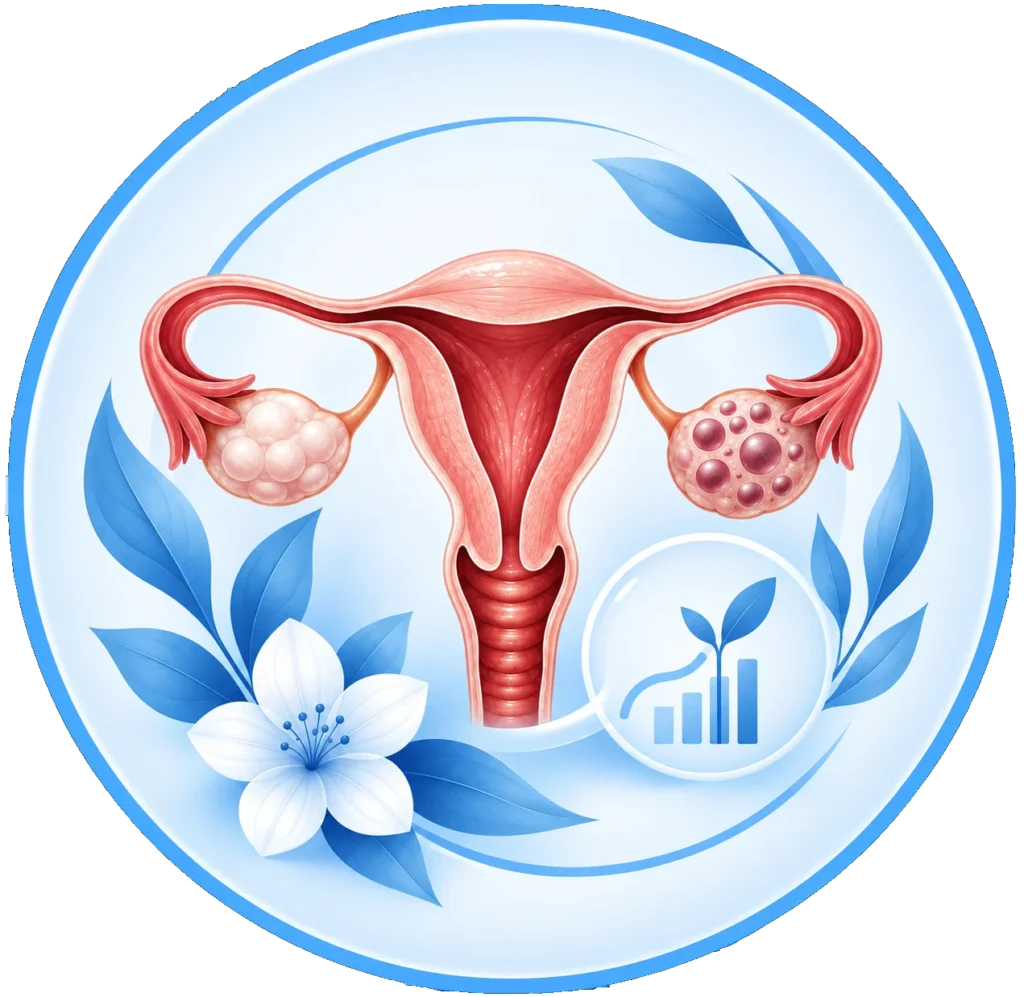
The old name put the focus on "cysts" on the ovaries. What an ultrasound actually shows are many small follicles (fluid-filled sacs, each holding an egg that hasn't fully matured), and not every woman with the condition has them. So some women were told they had PCOS because of a scan alone, while others were missed because their scan looked normal.
The name also hid the bigger picture. Irregular periods, acne, extra hair and weight changes were often treated one at a time, while the risks to blood sugar and heart health went unchecked. The condition affects about 1 in 8 women, and up to 70% are thought to be undiagnosed.
The new name came out of more than ten years of international consultation, led from Monash University in Australia, with over 50 patient groups and medical societies taking part. Women living with the condition pushed hardest for the change.
Not sure if this is you? Take the free 2-minute PCOS checklist.
Start the checklistWhat changes
What stays the same
The name on new reports, prescriptions and articles, over about three years
The condition itself: if you had PCOS, you have PMOS
More attention to the metabolic side: expect blood sugar and cholesterol checks, not only questions about periods and scans
How it's diagnosed: for now, doctors use the 2023 international guideline
Less weight on "cysts" seen on a scan
What helps: regular meals, daily movement, good sleep and, when needed, medicines your doctor prescribes
In India, many people say PCOD (polycystic ovarian disease), and some websites describe PCOD as a separate, milder condition. International guidelines don't: they use one name, PCOS, and now PMOS. If a report or a doctor says PCOD, ask what they mean, and whether your blood sugar and cholesterol have been checked.
→ Already diagnosed? Your care doesn't change. At your next visit, ask whether your blood sugar and cholesterol have been checked recently.
→ Noticing signs but no diagnosis? Irregular periods, extra hair, acne or weight around the waist are worth discussing with a doctor. Take the free PCOS checklist
→ Want to work on the metabolic side? Regular meals built on Indian home food, daily movement and good sleep help, whatever the condition is called. See the PCOS Indian Food Guide
⚠ See a doctor soon
See a doctor soon if your periods have stopped for three months or more, if you bleed very heavily, or if you've been trying to get pregnant for a year (six months if you're 35 or over).
Questions
What is the full form of PMOS?
Polyendocrine metabolic ovarian syndrome. It replaces polycystic ovary syndrome (PCOS).
When was PCOS renamed PMOS?
The new name was published in The Lancet on 12 May 2026 and presented at the European Congress of Endocrinology in Prague.
Do I need a new diagnosis?
No. A PCOS diagnosis is a PMOS diagnosis. Your doctor may simply use the new name at your next visit.
Is PMOS more serious than PCOS?
No. It is the same condition; the new name describes it more completely.
Will Indian doctors and labs use the new name?
The switch is expected to take about three years worldwide, so you'll see PCOS, PCOD and PMOS side by side for a while.
Sources
· Polyendocrine metabolic ovarian syndrome, the new name for polycystic ovary syndrome: a multistep global consensus process, The Lancet, 12 May 2026
· PCOS is now called PMOS, STAT, 12 May 2026
· PCOS is now PMOS: understanding the name change, ASRM, 27 May 2026
· Summary of the 2023 international evidence-based PCOS guideline, Medical Journal of Australia, 2024
Our reviewers check the medical facts on this page. They don't review or endorse our products.
This article is for general information and doesn't replace advice from your own doctor.
Keep reading