Description
Acne along the jaw, coarse hair on the chin, a widening parting, dark velvety skin on the neck: these are among the most common signs of PCOS (now called PMOS), and often the most upsetting. Most of them share two drivers, raised androgens and insulin resistance. That is why a new face wash alone rarely changes much, and why what you eat, how you sleep and how you move matter as much as what you put on your skin.
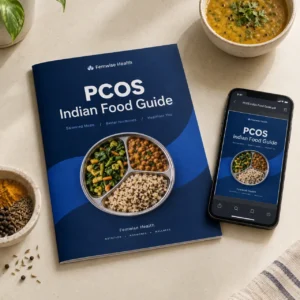
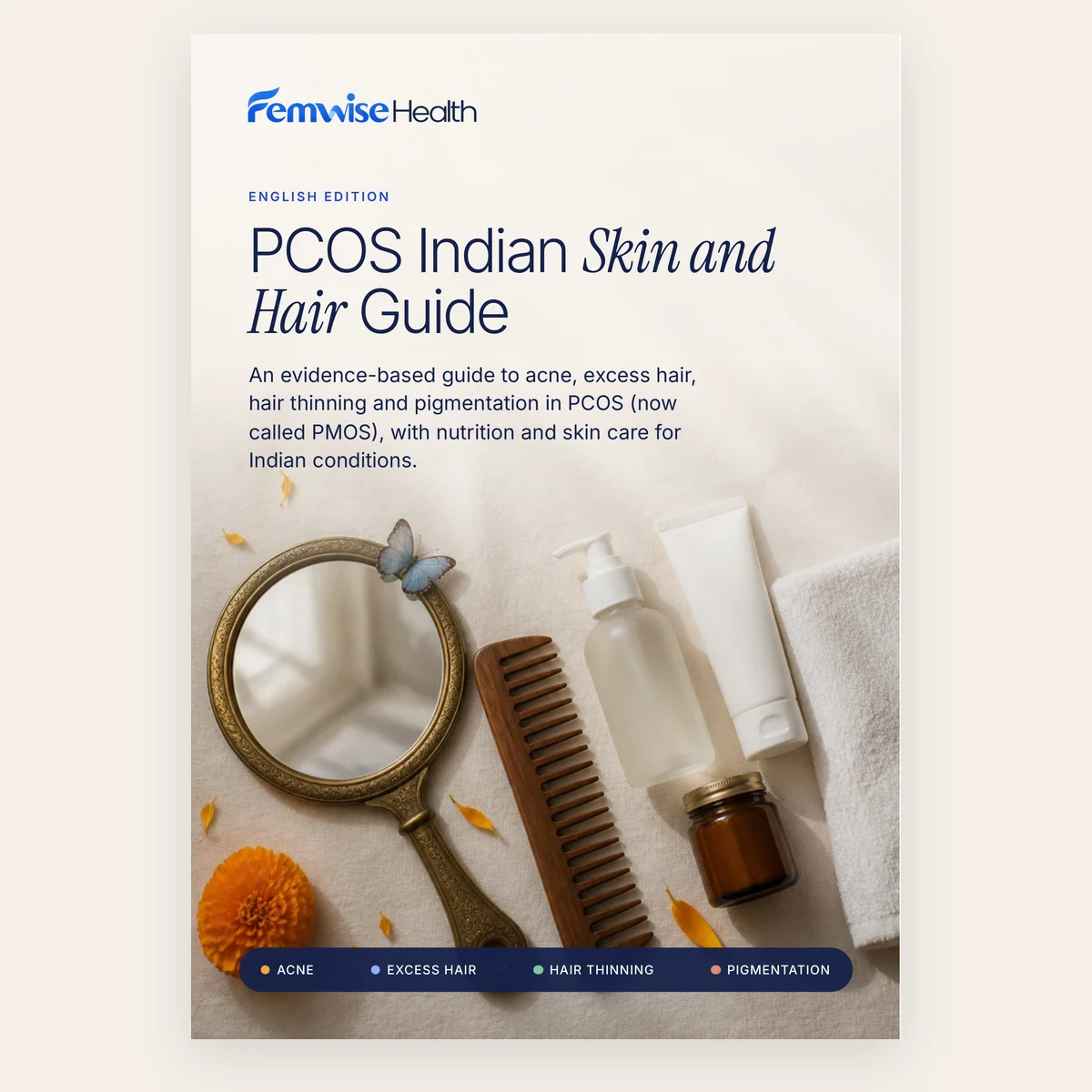
The PCOS Indian Skin and Hair Guide is written the way we counsel women in clinic. It explains what is happening, what helps, what to stop doing, and when to see a doctor. The advice draws on the 2023 international PCOS guideline and Indian dermatology research, and it is written for brown skin, Indian kitchens and Indian weather.
What’s inside
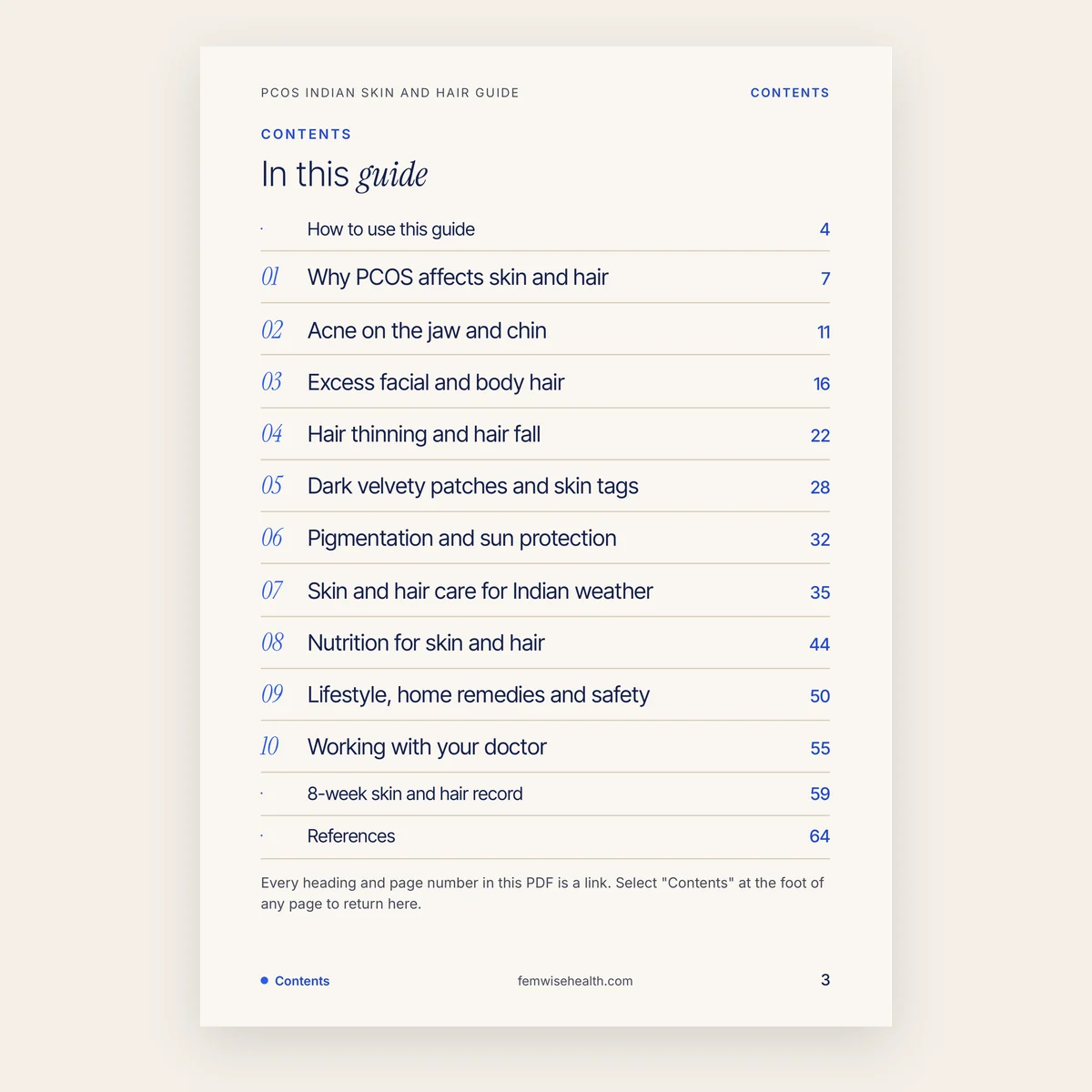
- Why PCOS affects skin and hair: the two hormonal drivers, how common each change is, and realistic timelines measured in months, not days.
- Acne on the jaw and chin: how to recognise hormonal acne, everyday triggers to remove, what the evidence says about diet and acne, and how to prevent dark marks.
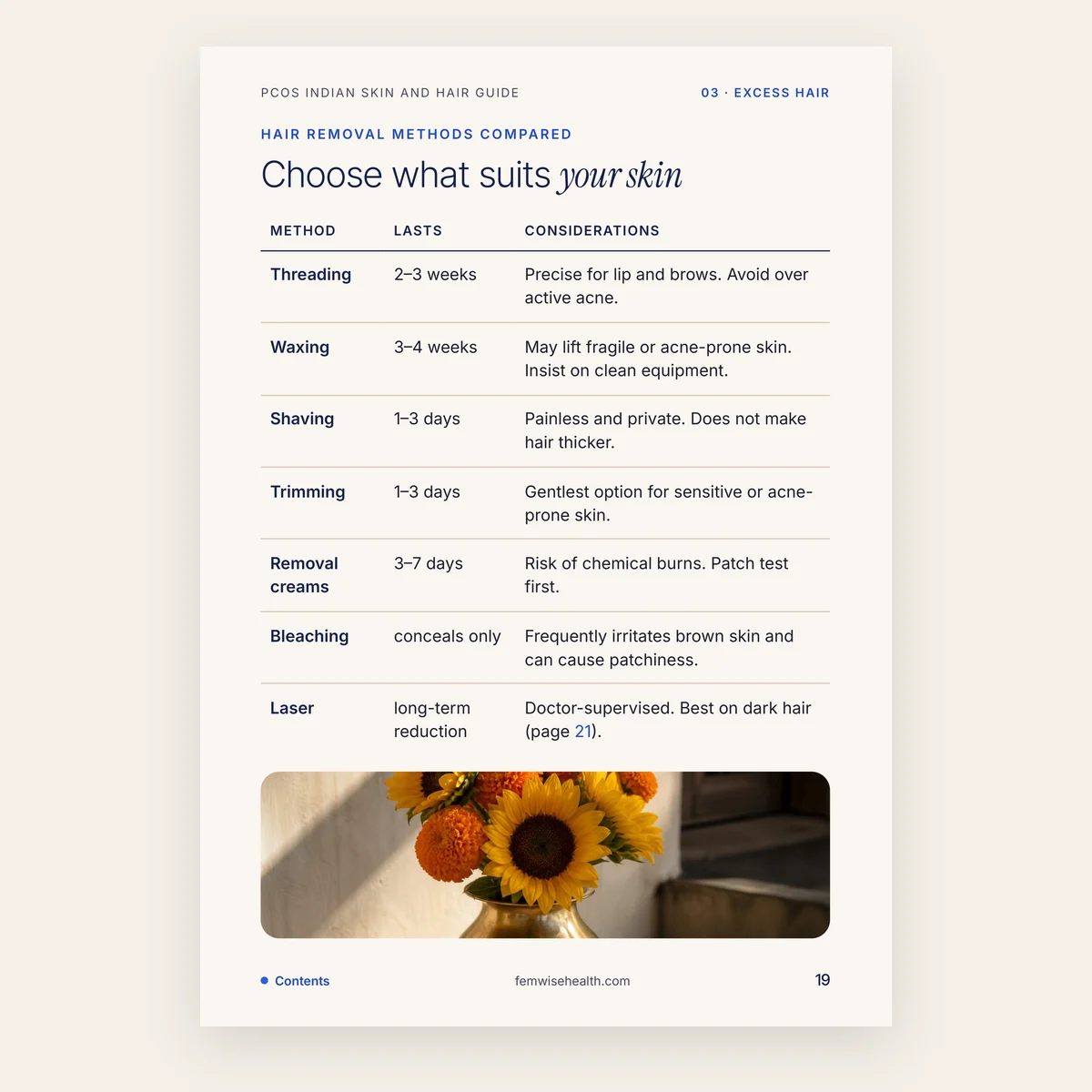
- Excess facial and body hair: threading, waxing, shaving, trimming, creams and laser compared, with tips to reduce irritation and marks.
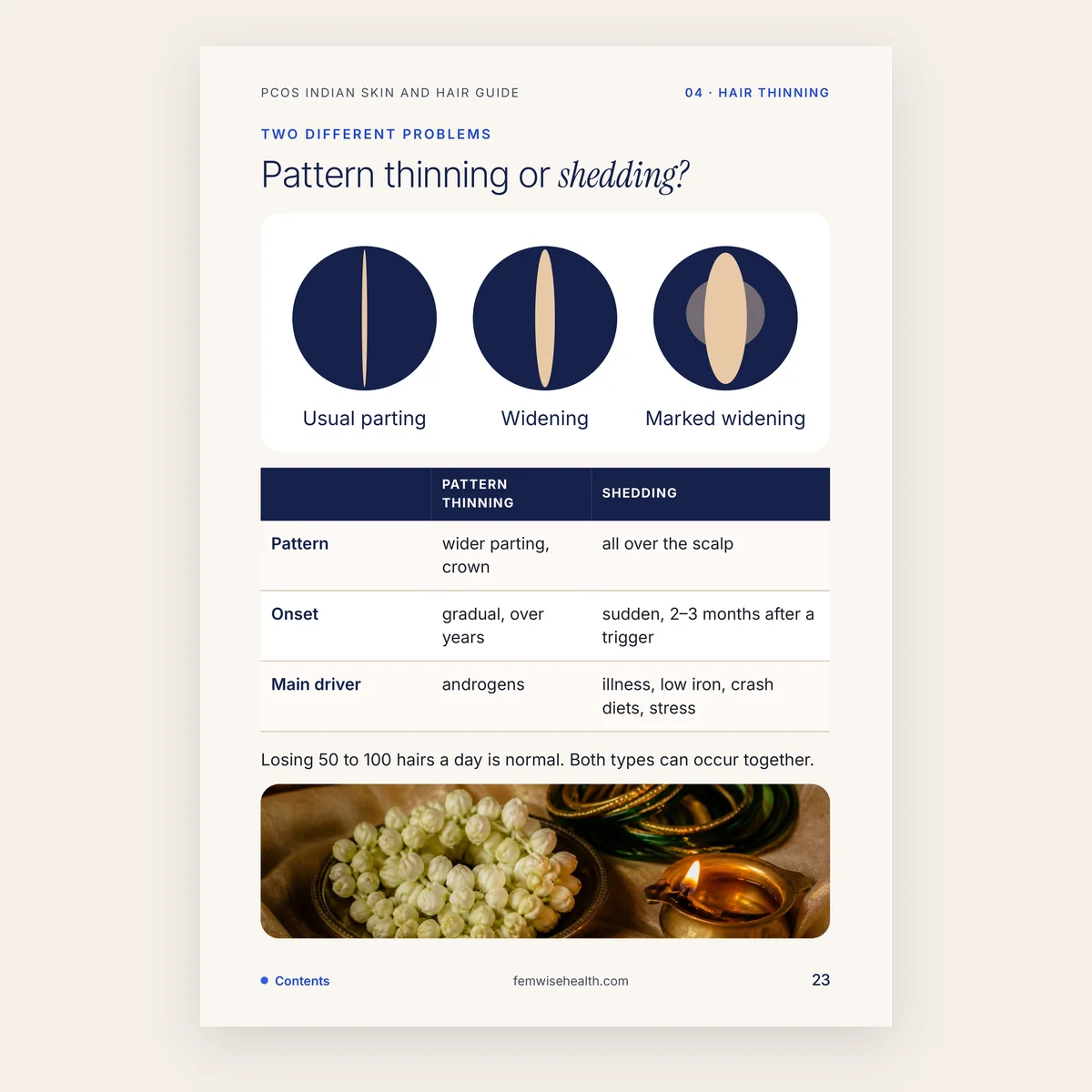
- Hair thinning and hair fall: pattern thinning versus shedding, nutritional causes that are often missed in India, gentle hair care, oiling and hard water.
- Dark velvety patches and skin tags: why they are a metabolic sign rather than a hygiene problem, and how to tell them apart from a fungal infection.
- Pigmentation and sun protection: why marks last longer on brown skin and how to choose and use sunscreen every day.
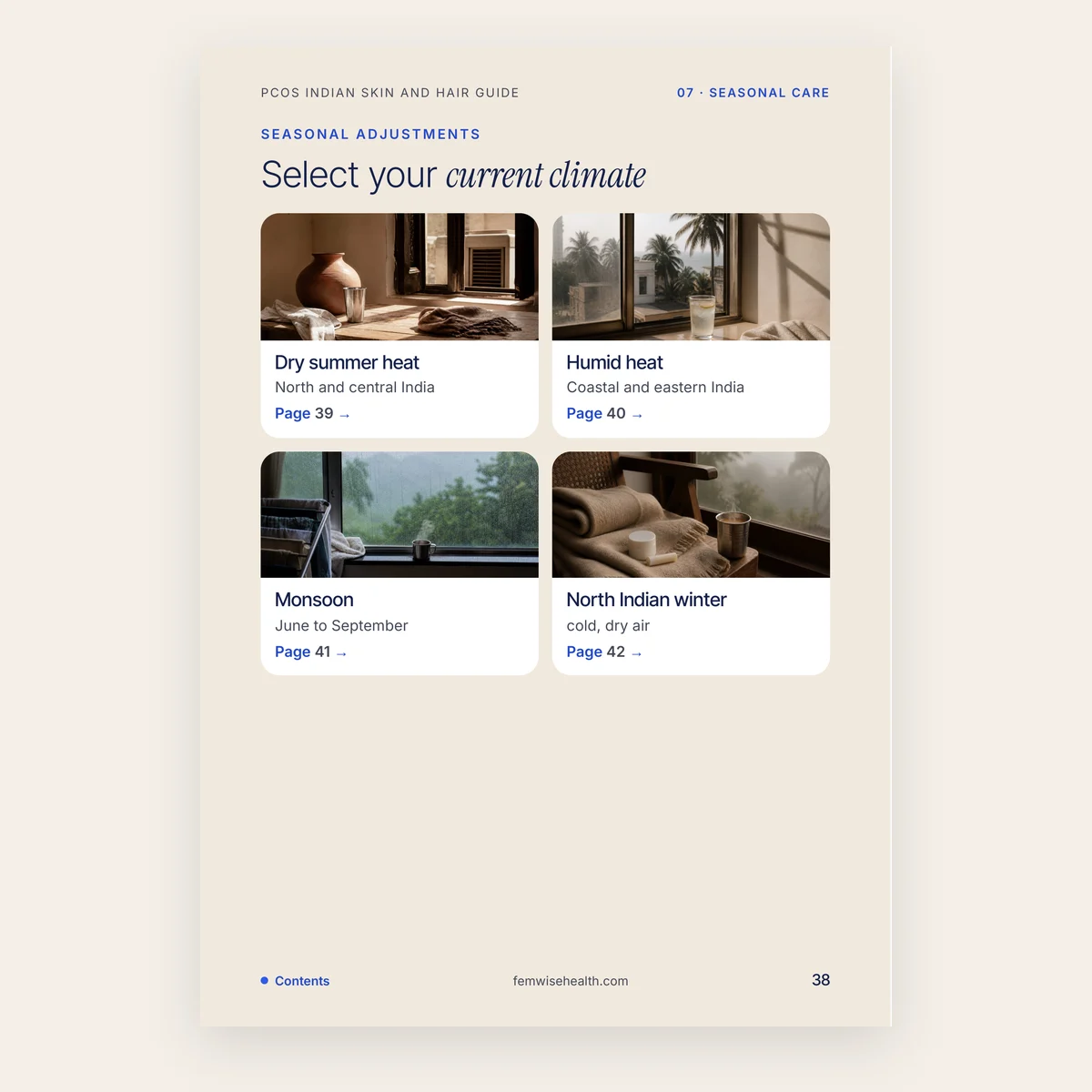
- Care for Indian weather: a three-step daily routine, a skin type check, and adjustments for dry summer heat, humid heat, monsoon, North Indian winter, weddings and festivals.
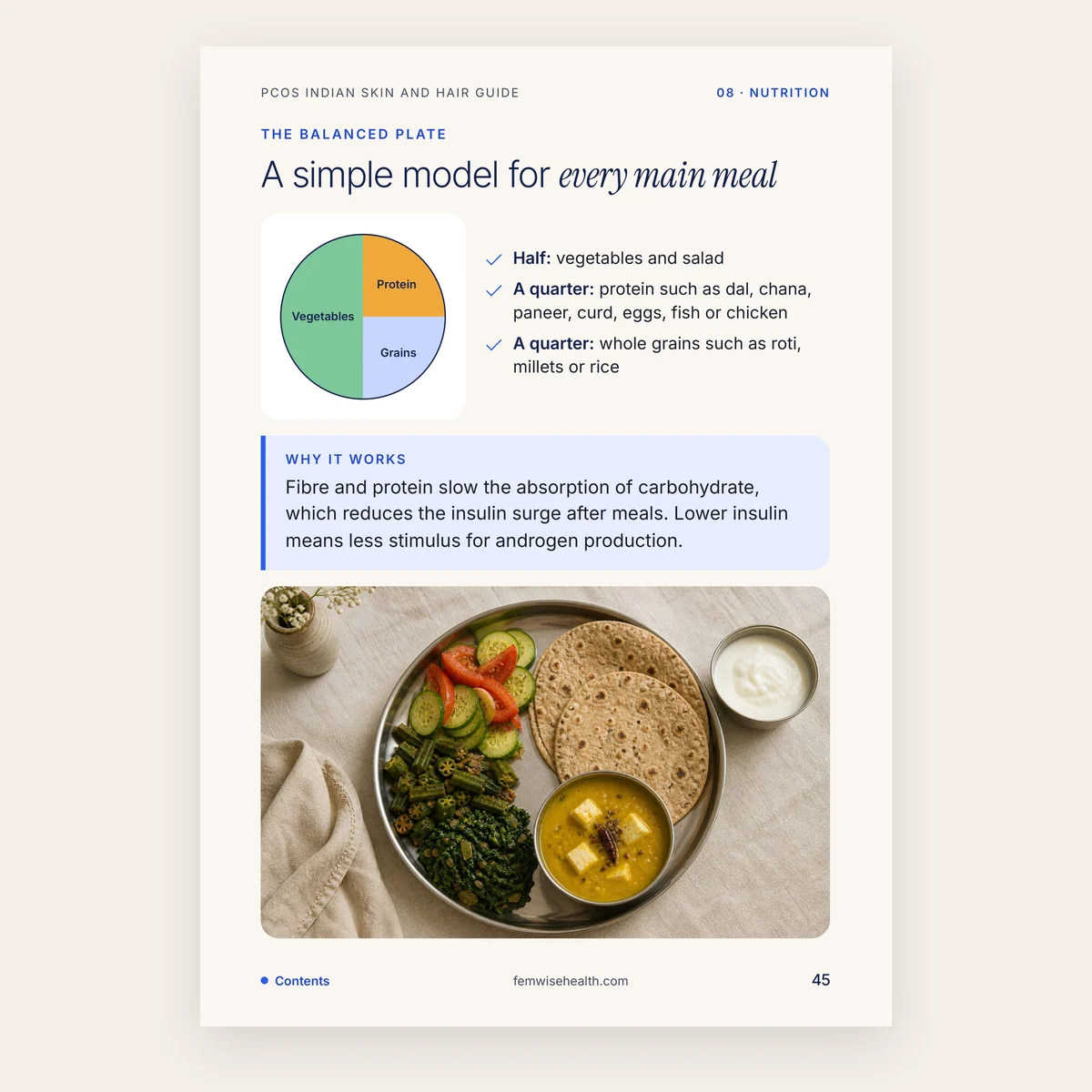
- Nutrition for skin and hair: the balanced plate model, blood-sugar-friendly swaps for Indian meals, protein and hair-food tables, and a sample day.
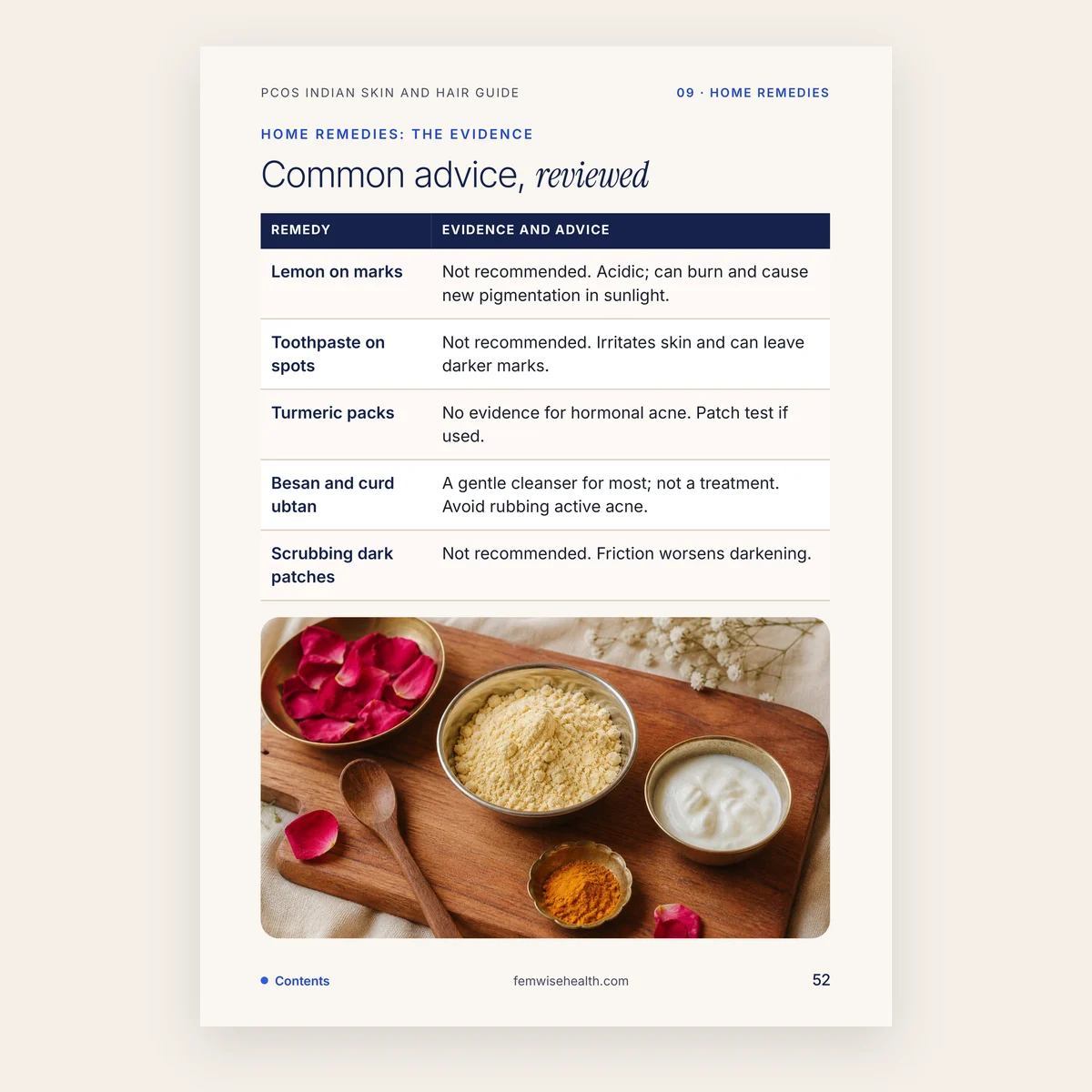
- Lifestyle, home remedies and safety: activity, sleep and stress, common home remedies reviewed against the evidence, and a warning on unlabelled and steroid-containing creams.
- Working with your doctor: which specialist to see for which concern, what to bring and ask, and support for your emotional wellbeing.
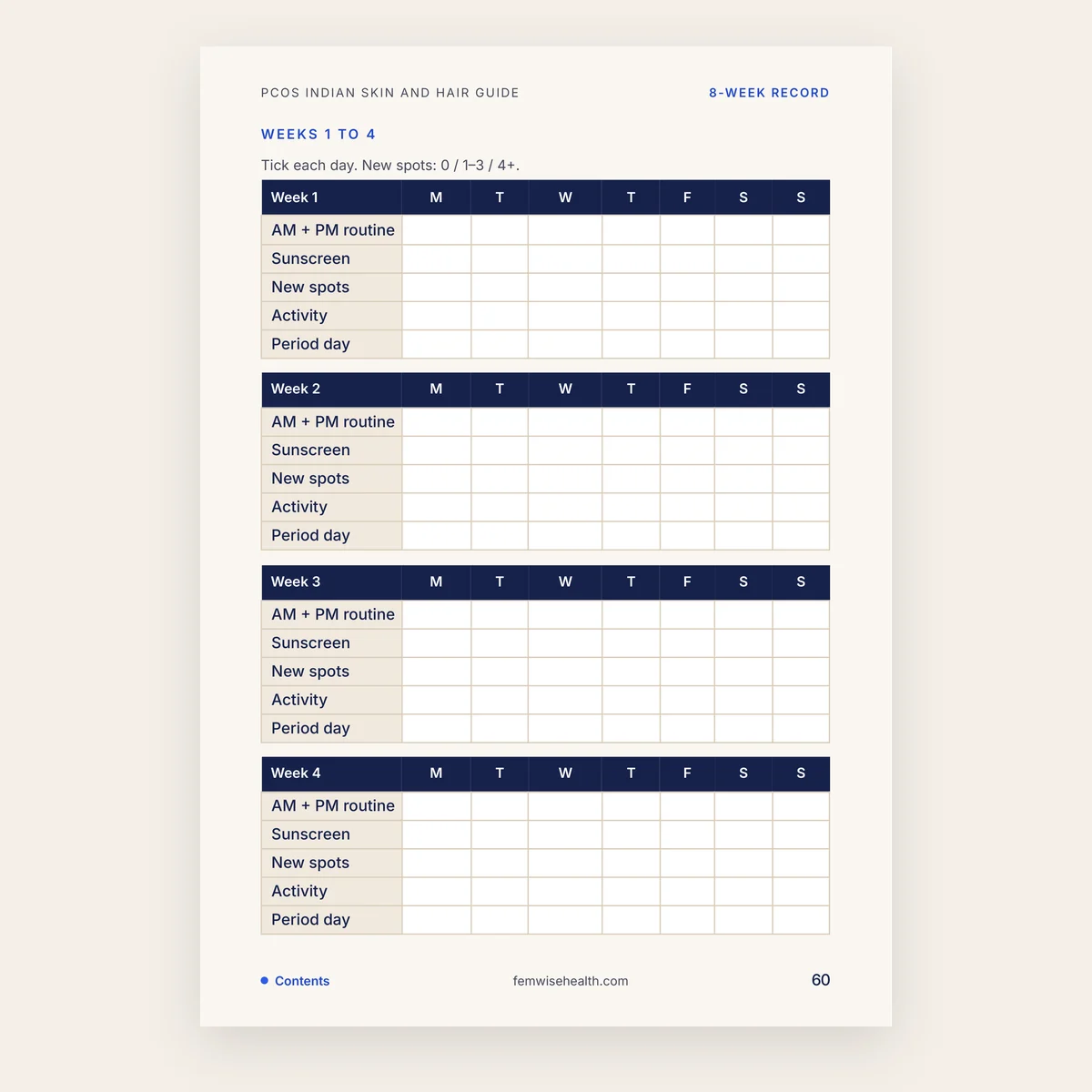
It ends with a printable 8-week skin and hair record and a full list of references.
Please note
This guide is education, not treatment. It does not diagnose PCOS (now called PMOS) or any skin condition, and it does not replace your doctor or dermatologist. If you are pregnant or breastfeeding, if changes appear suddenly or progress quickly, or if you are already under treatment, speak to your doctor first.
Download links work for 30 days and up to 5 downloads. Your copy is for your own use; please don’t share it. Some visuals in the guide are generated using AI.